
A Level 2 survey and a Level 3 survey both assess the condition of a property before you buy, and both follow the RICS Home Survey Standard. The property itself sets the level: its age, its construction and its visible condition.
A conventional home of standard construction, built from around the 1960s onwards and in reasonable condition, is usually well served by a Level 2 survey. An older, period, extended or non-standard home, or one that needs repair or refurbishment, usually needs a Level 3 survey.
Beloved Home Surveys is an independent, RICS-regulated residential surveying practice based in Sheffield, with particular experience of the city’s older housing and of non-traditional construction. When you book a survey with us, the AssocRICS surveyor who inspects your home writes your report and takes your follow-up call. The report is with you in five working days. We are independent of estate agents, mortgage lenders and panel managers, and we advise on the right survey level before you book rather than defaulting to the bigger survey. If you are buying in Sheffield and not sure which survey you need, tell us about the property and we will say which level suits it.
Level 2 or Level 3 at a glance
| Level 2 survey | Level 3 survey | |
|---|---|---|
| Best suited to | Conventional homes, broadly 1960s onwards, in reasonable condition | Older, period, extended, altered, run-down or non-standard homes |
| Inspection | Visual and non-intrusive | Visual and non-intrusive |
| Condition ratings | Each element graded 1 to 3 | Each element graded 1 to 3 |
| Defect reporting | Records and rates defects; general repair and maintenance advice | Records and rates defects; explains the cause, implications and repair options |
| Construction detail | Outline description | Detailed description of construction and materials |
Both a Level 2 survey and a Level 3 survey use the same visual, non-intrusive inspection. A Level 3 report goes further in explaining defects, their likely causes and the repair options.
A Level 1 survey exists as a more concise option for conventional, newer homes in good condition.
Level 2 vs Level 3: the real difference
The inspection
Both a Level 2 survey and a Level 3 survey are visual, non-intrusive inspections.
- Neither a Level 2 nor a Level 3 survey involves invasive investigation or opening up the structure of the property.
- The surveyor will not lift fitted carpets or move heavy furniture at either level.
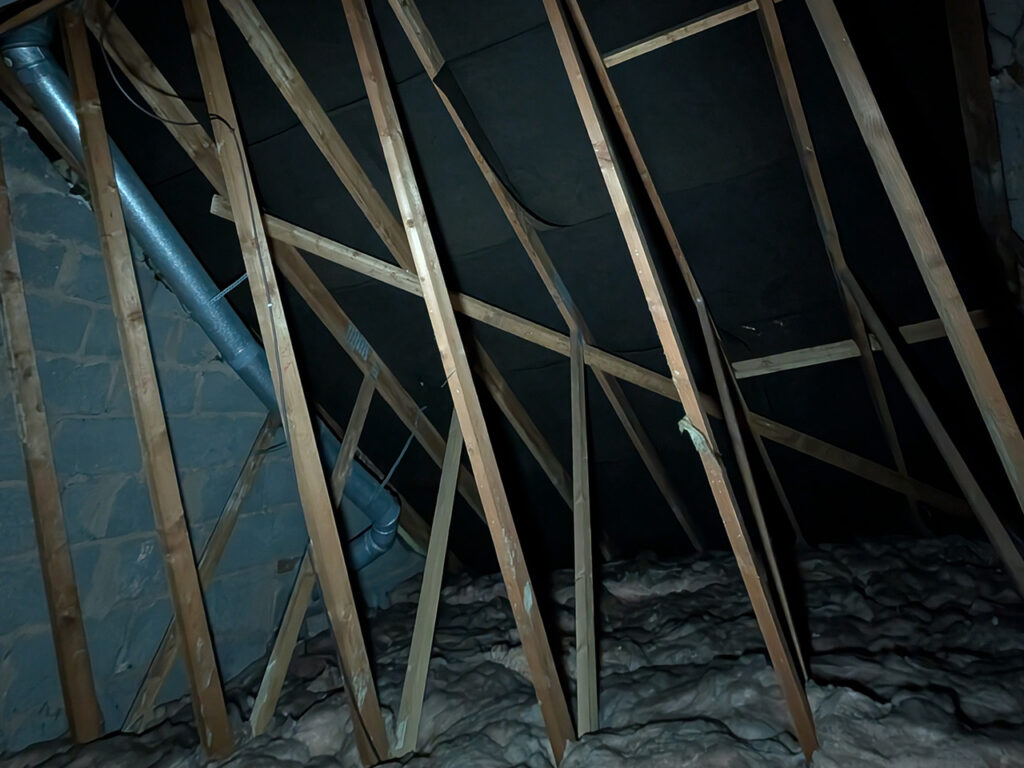
- Where a roof space is present and is safe and reasonably accessible, the surveyor will normally inspect it at either level.
- Concealed areas or elements that cannot be safely accessed may not be inspected.
- At Level 2, the surveyor enters the roof space to visually inspect the structure and insulation.
- In a Level 3 survey, the surveyor will also lift small corners of insulation to check its thickness and the condition of the ceiling below.
The report
Both a Level 2 report and a Level 3 report use condition ratings to grade each element of the property.
- A Level 2 survey identifies visible defects and gives each element a condition rating from 1 (no significant repair needed) to 3 (serious or urgent).
- The Level 2 report provides general repair and maintenance advice, and where a defect needs attention, the report says so and rates it accordingly.
- A Level 3 survey goes further: defects are explained in greater detail, including their likely causes, the implications for the building and the available options for repair or further investigation.
On a property where a Level 2 survey is the right fit, the condition ratings and general guidance are enough. On an older or more complex property, a Level 2 report often ends with repeated referrals to specialists for further investigation, each question left open. According to the RICS Home Survey Standard, a Level 2 survey applied to an unsuitable older property is likely to be inconclusive, often resulting in numerous referrals for further investigations that many clients find disappointing.
Which survey level do you need?
A standard brick-built house from the 1960s in good condition needs far less investigation than a Pre-First World War terrace with damp walls and a sagging roof. Five things about the property will help you make the decision:
- Age
- Construction type
- Visible condition
- Whether it has been significantly extended or altered
- Size
Choosing the survey level on price alone is a common mistake. A Level 2 survey on an older or non-standard property often results in further investigations to answer the questions the report could only flag. A Level 3 survey on a sound, modern home buys little extra. A new build calls for a snagging survey, not a Level 2 or Level 3.
If you are not sure which level you need, we will advise before you book, based on the property itself, rather than defaulting to the bigger survey.
We arrange access with the estate agent on your behalf. The surveyor who carries out the inspection writes the report and talks you through the findings. We remain available to discuss concerns or answer questions as the purchase progresses.
When a Level 2 survey is enough
A Level 2 survey is the right level for a conventional brick-built home, built from around the 1960s onwards, in reasonable condition. The property should show no obvious signs of dampness, cracking or roof trouble, and no significant extensions or structural alterations.
The Level 2 survey still identifies significant defects and rates each element using the condition ratings. Where a defect needs attention, the report provides practical guidance on repairs, maintenance and any further investigations that may be advisable. On a sound, well-kept home of standard construction, that level of detail is proportionate. A Level 3 survey on the same property does not produce more useful information.
If this describes the property you are buying, our RICS Level 2 Home Survey covers what you need.
When you need a Level 3 survey
A Level 3 survey is the right level where the property is older, non-standard or showing signs of trouble. On these homes, a Level 2 survey tends to record a defect, rate it and refer you to a specialist for further investigation. A Level 3 survey provides that investigation within the report: the likely cause, how serious the defect is and the practical options for repair.
A Level 3 survey is usually the right choice where the property is:
- A Pre-First World War terrace or other period home
- Of non-traditional or timber-framed construction
- Listed, or within a conservation area: Sheffield has just under 1,200 listed buildings, and you can check any address on the council’s conservation areas map
- Significantly extended, converted or internally altered
- Run-down, neglected or in visibly poor condition
- Showing signs of dampness, cracking or movement
- Recently refurbished, where cosmetic finishes may conceal underlying defects
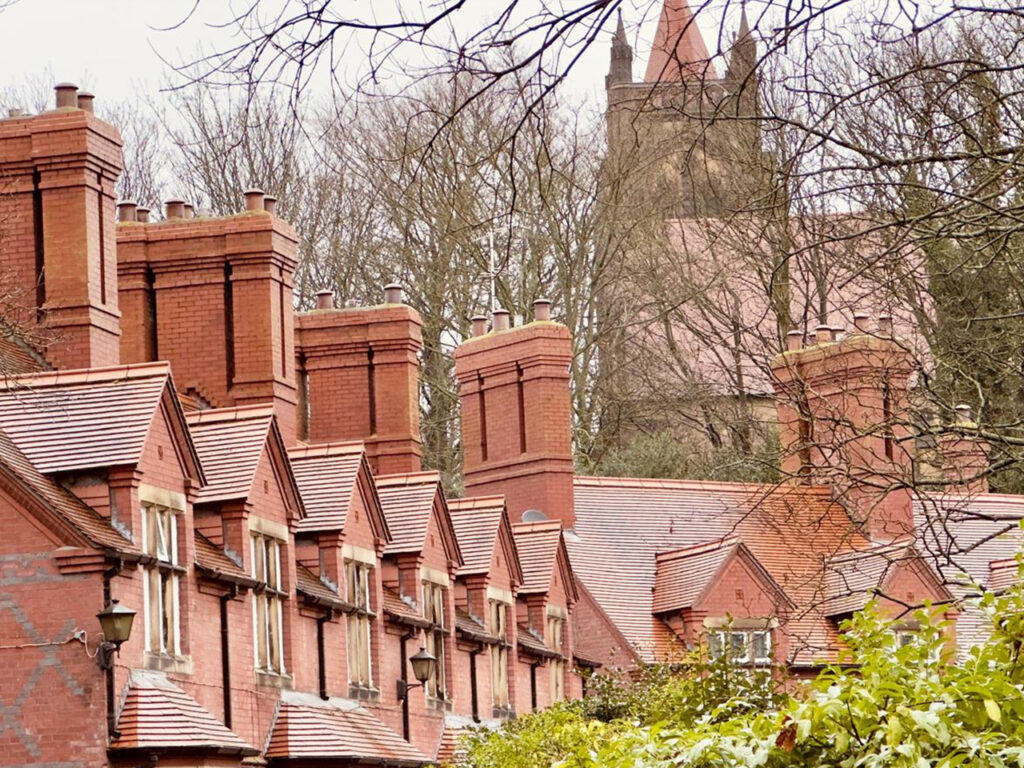
A Level 3 survey is also the right level if you are planning major renovation or structural work. The detailed description of the building’s construction and materials helps you and your contractor understand what you are working with before the project begins.
If the property falls into any of these categories, our RICS Level 3 Building Survey provides the depth of reporting those properties need.
Older and non-traditional homes in Sheffield
Semi-detached and terraced houses make up almost two thirds of Sheffield’s homes (38% semi-detached, 26% terraced, Sheffield City Council housing strategy evidence, 2024).
Pre-First World War terraces
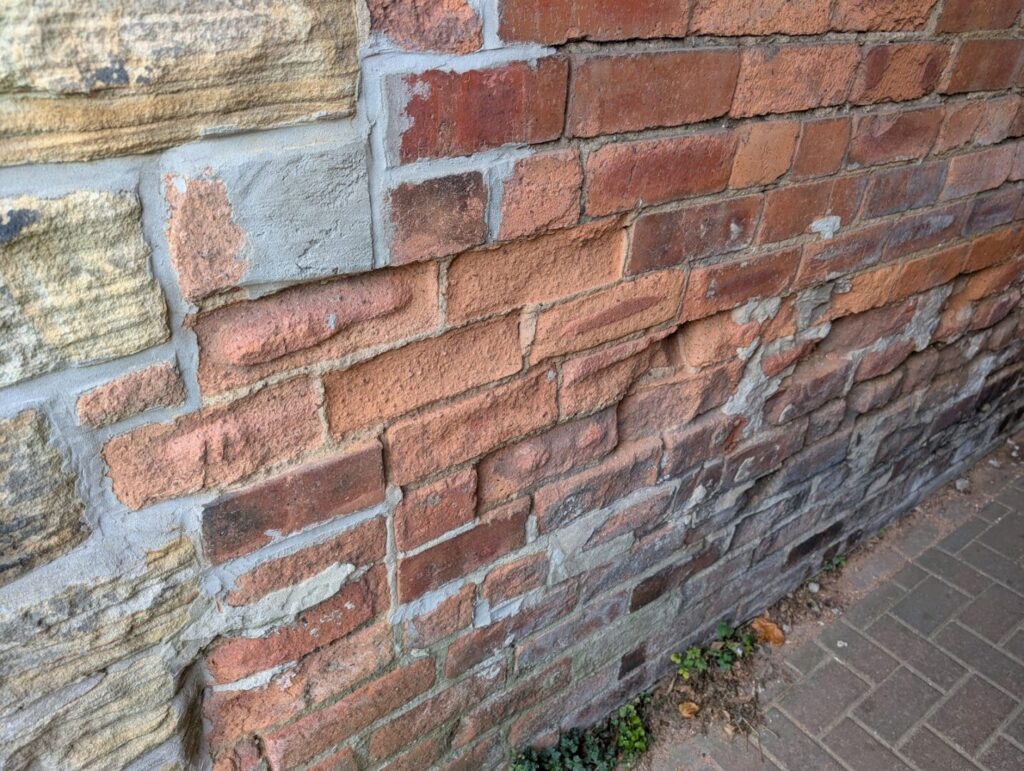
These terraces have solid brick or stone walls, traditionally slate-covered roofs and suspended timber floors (floors built on timber joists above a void, not on solid ground). Common issues include dampness, deteriorating pointing (the mortar between the bricks), defective roof junctions (where different sections of the roof meet) and inadequate ventilation beneath the floors. We also look for unsuitable modern repairs, particularly hard cement pointing.
In a recent survey, we found traditional brickwork deteriorating alongside areas of hard cement pointing. Older properties were often constructed using soft bricks and lime mortar, allowing moisture to evaporate through the mortar joints. Modern cementitious mortar can be harder and less permeable than the surrounding bricks, restricting moisture evaporation and potentially contributing to trapped moisture, frost damage and deterioration of the brickwork. Traditional buildings need compatible and sympathetic materials, and using stronger mortar does not necessarily mean a stronger wall.
1920s and 1930s semis
These semis are commonly built with cavity walls (double-skinned walls with a gap between the inner and outer leaves), suspended timber floors and bay windows. We look for dampness, movement around bay windows, signs of possible wall-tie corrosion (wall ties are the metal fixings that hold the two skins of a cavity wall together) and defects associated with later extensions.
Non-traditional construction
Non-traditional properties use structural systems that differ from conventional construction, including concrete, steel and timber frames. We have experience of systems such as Wimpey No-Fines, Laing Easiform, Hawksley BL8 and Reema. Certain systems have been designated as defective under the Housing Defects Act 1984, and mortgage lenders may require evidence that an approved repair scheme has been completed. A Level 3 survey can help identify the construction type, explain common defects and provide guidance on repair options.
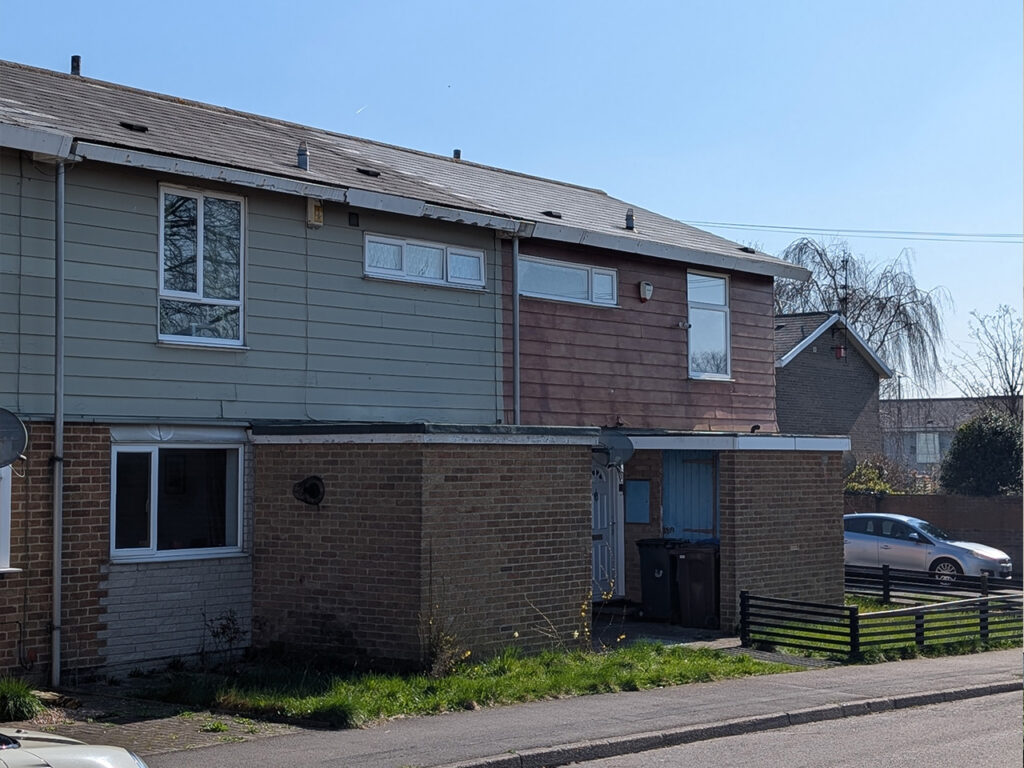
These properties carry problems that are difficult to judge on a viewing:
- Dampness
- Timber decay in floors and roofs
- Settlement and movement
- Ageing roof coverings
- Deteriorating pointing
A Level 3 survey investigates the likely cause and the remedy, not just the defect.
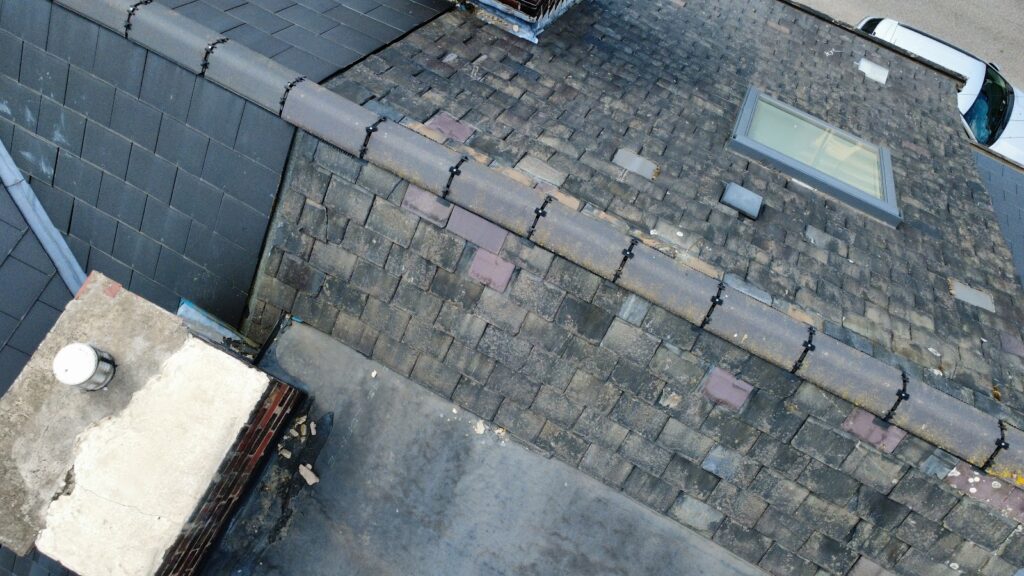
An RICS-regulated surveyor with experience of older and non-standard construction will know where these defects tend to appear and what they mean for the building. Where a steep or hard-to-reach roof cannot be properly inspected from ground level, a drone roof inspection can be arranged as an additional service. The drone captures detailed aerial images of high-level elements, helping to identify damaged tiles, defective flashings, blocked valleys or deterioration to chimney stacks that may not be visible from the ground.
At Beloved Home Surveys, we are independent of estate agents, mortgage lenders and panel managers, and act solely on your behalf to provide impartial advice on the property and the defects found.
A survey of any level does not replace your conveyancing searches. Local and environmental searches are arranged separately through your solicitor. The local authority search your solicitor orders comes from Sheffield City Council’s local land charges service.
How much more does a Level 3 survey cost?
A Level 3 survey costs more than a Level 2 survey because it takes longer on site and produces a more detailed, interpretive report. The exact fee varies with the property’s size, value, age, construction and location.
At Beloved Home Surveys, a Level 2 survey starts from £395 and a Level 3 survey starts from £495. Fees are a little higher from May to September.
Paying less for a Level 2 survey on a property that needs a Level 3 survey is a false economy. A Level 2 report on an older or complex home often ends with referrals for further investigation, each arranged and paid for separately. The Level 3 survey provides that analysis within the report. On a sound, standard, modern home, the Level 2 survey already covers what matters.
Repair-cost estimates, providing an indication of the likely cost of addressing defects found during the inspection, can be arranged as an additional service alongside either level of survey.
What happens if your survey finds a serious problem?
A condition rating of 3 means the defect is serious, needs urgent repair or replacement, or requires further investigation before you can fully understand its implications.
A Level 2 survey or a Level 3 survey is a general inspection of the whole property. Where a serious defect is identified, the report describes what has been observed and advises on its significance, but it may not be possible to determine the full cause or extent through a visual inspection alone. The usual next step is a focused further investigation by the relevant specialist.
A Specific Defect Analysis is a targeted inspection of one particular concern, such as cracking, dampness or a roof defect. The aim is to identify the likely cause, assess its significance and provide clear, independent advice on the options for repair or further investigation. We do not carry out repair work or sell additional services, so the advice is focused solely on recommending the appropriate next steps. If your survey report raises a concern that needs a closer look, our Specific Defect Analysis is designed for exactly that.
The common responses to a serious finding are to:
- Renegotiate the purchase price
- Ask the seller to carry out the repair before completion
- Commission the further investigation to understand the full picture
- Withdraw from the purchase
FAQs
Can I use my survey report to renegotiate the house price?
Documented defects and any repair-cost guidance in the survey report are common grounds to renegotiate the purchase price or ask the seller to carry out repairs before completion. The outcome depends on the negotiation between you and the seller, and your solicitor can advise on how best to raise the findings.
Does a Level 2 survey include a valuation?
A house survey assesses the condition of a property, not its market value. Neither a Level 2 survey nor a Level 3 survey is a mortgage valuation. The mortgage valuation is a separate assessment arranged by your lender, carried out for the lender’s benefit, not yours.
What is a Level 1 home survey?
A Level 1 survey, formerly known as the Condition Report, is the most basic RICS survey level. It provides a concise visual assessment of a conventional, newer home in good condition, with less detail and less advice than a Level 2 survey. If you are purchasing an older or more complex property, you will need a Level 2 survey at minimum.
Do I need a Level 2 or Level 3 survey for a flat?
A modern, conventionally built flat in good condition is usually well served by a Level 2 survey. A flat in a period or converted building, or one showing signs of dampness, cracking or other problems, is better served by a Level 3 survey. The same principle applies: the property sets the level.